

反日はどこからくるの
反日を追っています。そして守るべき日本とは何か考えています。
幹部の一斉辞任を招いた「外国特派員協会」お家騒動
(´・ω・`)今更だけど一応書いておくかな
告発
ルーシー・バーミンガム元会長曰く
適当訳:報道の自由賞は大成功だったわ(←はい?
メンバーに対する個人攻撃ってマッカーシズムみたいぃ
今時正式な特派員なんて少ないしぃ
報道の自由賞
あんまり馬鹿馬鹿しいんで書く気力すらなかったが
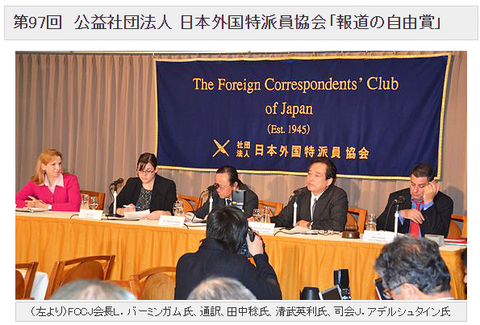
http://www.rosetta.jp/fccj/150422.html
特派員の方々はこれに納得してるのかね?
報道の自由度by国境なき記者団
→吉松育美さん騒動16 「国際基準」に踊るのを見て笑う人がいる
結果今度の会長は
ジェイムス・シムズ氏@forbes になったみたいですね
http://www.fccj.or.jp/about/president-and-board-of-directors.html
参考
正体がバレてきた外国特派員協会
https://twitter.com/catbsky/status/600976719353262080
https://twitter.com/catbsky/status/606417796923166720
https://www.facebook.com/SosFccj/posts/816611775102569
https://www.facebook.com/note.php?note_id=828331310597282
週刊新潮2015.6.4号
p134
幹部の一斉辞任を招いた「外国特派員協会」お家騒動
金脈追及の発端となった1974年の田中角栄総理(当時)をはじめ、最近ではイスラム国に殺害された後藤健二さんの母・石堂順子氏や、翁長雄志・沖縄県知 事など”時の人”の記者会見で知られる、日本外国特派員協会。45年の設立から70年の今年、にわかにお家騒動が勃発した。
その中心人物が、特派員協会の第一副会長を務めるアメリカ人のマイケル・ペン氏(44)=写真右=だ。
「6月10日に、協会の理事選挙と会長選挙が行われることになっており、ペン氏が会長の最有力候補と見られているのですが、氏に”正会員”の資格があるのかが問題になったのです」(協会関係者)
正会員の資格は”日本を拠点とし、その記事の大部分が海外へ報道される記者”が対象。ペン氏は”新月通信社”のCEO兼主任記者として正会員の資格を得ているのだが、 氏のジャーナリストとしての活動に疑義が生じているのだ。
「理事会の下のメンバーシップ委員会は、ペン氏に資格再検討のための資料提出を求めましたが、氏はほぼ黙殺。しかも”新月通信社”は登録された法人ではないうえ、米カリフォルニア州にあるはずの本拠も、単なる民家だった」(同)
委員会は理事会に大使、”ペン氏は正会員資格を失うべき”と上申したが理事会はこれを受け入れず、5月14日、氏の正会員資格を認めた。これに失望した5名の委員会全員が16日、抗議の辞任をしたのである。
当のペン氏ご本人は”新月通信社”の登記については明言を避けたが、
「4月、オランダのメディアと特派員契約を結びましたし、新月通信社のツイッターには4000人のフォロワーがいます。メディアの潮流は、私のような小規模のネットニュース通信社へと変わりつつあります」
と、ジャーナリストとしての実績はあると主張し、委員会と真っ向から対立。こうなったら、理事選挙前に”ペン氏記者会見”を開いてみては?お得意なんですから・・・・。
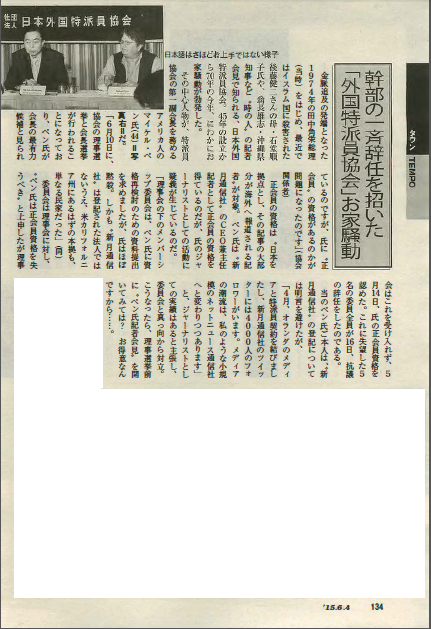
4000人のフォロワー?(失笑p134
幹部の一斉辞任を招いた「外国特派員協会」お家騒動
金脈追及の発端となった1974年の田中角栄総理(当時)をはじめ、最近ではイスラム国に殺害された後藤健二さんの母・石堂順子氏や、翁長雄志・沖縄県知 事など”時の人”の記者会見で知られる、日本外国特派員協会。45年の設立から70年の今年、にわかにお家騒動が勃発した。
その中心人物が、特派員協会の第一副会長を務めるアメリカ人のマイケル・ペン氏(44)=写真右=だ。
「6月10日に、協会の理事選挙と会長選挙が行われることになっており、ペン氏が会長の最有力候補と見られているのですが、氏に”正会員”の資格があるのかが問題になったのです」(協会関係者)
正会員の資格は”日本を拠点とし、その記事の大部分が海外へ報道される記者”が対象。ペン氏は”新月通信社”のCEO兼主任記者として正会員の資格を得ているのだが、 氏のジャーナリストとしての活動に疑義が生じているのだ。
「理事会の下のメンバーシップ委員会は、ペン氏に資格再検討のための資料提出を求めましたが、氏はほぼ黙殺。しかも”新月通信社”は登録された法人ではないうえ、米カリフォルニア州にあるはずの本拠も、単なる民家だった」(同)
委員会は理事会に大使、”ペン氏は正会員資格を失うべき”と上申したが理事会はこれを受け入れず、5月14日、氏の正会員資格を認めた。これに失望した5名の委員会全員が16日、抗議の辞任をしたのである。
当のペン氏ご本人は”新月通信社”の登記については明言を避けたが、
「4月、オランダのメディアと特派員契約を結びましたし、新月通信社のツイッターには4000人のフォロワーがいます。メディアの潮流は、私のような小規模のネットニュース通信社へと変わりつつあります」
と、ジャーナリストとしての実績はあると主張し、委員会と真っ向から対立。こうなったら、理事選挙前に”ペン氏記者会見”を開いてみては?お得意なんですから・・・・。
告発
Discord erupts at FCCJ over news agency accreditation
TOKYO —The Foreign Correspondents’ Club of Japan, which became famous for exposing the late Prime Minister Kakuei Tanaka’s “money politics” back in 1974, and more recently having held press events featuring the mother of Kenji Goto, the Japanese journalist executed by the Islamic State, and U.S. base opponent, Okinawan Gov Takeshi Onaga, this year observes the 70th anniversary of its founding in 1945. But what Shukan Shincho (June 4) describes as a “family quarrel” may threaten to put a damper on any celebrations.
At the center of the controversy is the club’s First Vice-President, American Michael Penn.
“On June 10 the club will be holding elections for president and board members,” an unnamed source said to be “involved with the club” tells the magazine. “Mr Penn was said to be the most likely candidate to run for president, but the question was raised over whether or not he qualifies as a regular member.”
“Regular member” is defined as “a journalist based in Japan, whose majority of articles are reported overseas.” Penn’s employer, the Shingetsu News Agency, lists him as its CEO and main journalist. However, questions have been raised over his activities as a journalist.
“The Membership Committee, which functions under the board of directors, requested Penn to provide materials to review his membership status, but he has not complied,” the source continued. (Actually the source used the Japanese term “mokusatsu,” a word laden with historical baggage—c.f. the Potsdam Declaration—whose translation can range from “withheld comment” to “treated with silent contempt.”)
“What seems to be the case is that the address of the Shingetsu News Agency is not a registered corporation but a private residence in California,” he explained.
The club’s membership committee thereby advised the board of directors that Penn did not possess qualifications to be a regular member. The board of directors, however, overruled the membership committee, and on May 14 moved to recognize Penn’s status as a regular member. This set the stage for the five members of the membership committee to resign in protest en masse two days later.
While Penn has held off on clarification of the status of the Shingetsu News Agency, he is said to have taken a confrontational posture toward the membership committee, having affirmed his achievements, saying, “In April, we concluded a contract with a media organization in the Netherlands, and Shingetsu boasts 4,000 followers on Twitter. It is a trend in the media for small Internet news agencies like mine to be in a constant state of change.”
So how about having Penn holding a press conference, Shukan Shincho’s writer asks. It is, after all, his specialty.
Japan Today 2015.5.30
http://www.japantoday.com/category/kuchikomi/view/discord-erupts-at-fccj-over-news-agency-accreditation
(記事本文よりコメント欄が本番かも)TOKYO —The Foreign Correspondents’ Club of Japan, which became famous for exposing the late Prime Minister Kakuei Tanaka’s “money politics” back in 1974, and more recently having held press events featuring the mother of Kenji Goto, the Japanese journalist executed by the Islamic State, and U.S. base opponent, Okinawan Gov Takeshi Onaga, this year observes the 70th anniversary of its founding in 1945. But what Shukan Shincho (June 4) describes as a “family quarrel” may threaten to put a damper on any celebrations.
At the center of the controversy is the club’s First Vice-President, American Michael Penn.
“On June 10 the club will be holding elections for president and board members,” an unnamed source said to be “involved with the club” tells the magazine. “Mr Penn was said to be the most likely candidate to run for president, but the question was raised over whether or not he qualifies as a regular member.”
“Regular member” is defined as “a journalist based in Japan, whose majority of articles are reported overseas.” Penn’s employer, the Shingetsu News Agency, lists him as its CEO and main journalist. However, questions have been raised over his activities as a journalist.
“The Membership Committee, which functions under the board of directors, requested Penn to provide materials to review his membership status, but he has not complied,” the source continued. (Actually the source used the Japanese term “mokusatsu,” a word laden with historical baggage—c.f. the Potsdam Declaration—whose translation can range from “withheld comment” to “treated with silent contempt.”)
“What seems to be the case is that the address of the Shingetsu News Agency is not a registered corporation but a private residence in California,” he explained.
The club’s membership committee thereby advised the board of directors that Penn did not possess qualifications to be a regular member. The board of directors, however, overruled the membership committee, and on May 14 moved to recognize Penn’s status as a regular member. This set the stage for the five members of the membership committee to resign in protest en masse two days later.
While Penn has held off on clarification of the status of the Shingetsu News Agency, he is said to have taken a confrontational posture toward the membership committee, having affirmed his achievements, saying, “In April, we concluded a contract with a media organization in the Netherlands, and Shingetsu boasts 4,000 followers on Twitter. It is a trend in the media for small Internet news agencies like mine to be in a constant state of change.”
So how about having Penn holding a press conference, Shukan Shincho’s writer asks. It is, after all, his specialty.
Japan Today 2015.5.30
http://www.japantoday.com/category/kuchikomi/view/discord-erupts-at-fccj-over-news-agency-accreditation
ルーシー・バーミンガム元会長曰く
President's Message
June 2015
(後半一部抜粋)
On this note, our Freedom of the Press Awards project last month was a big success. The FoP Committee learned much through the process and will apply those lessons to improve next year’s awards. The judges were exceptionally patient, and one viewed with much bemusement a so-called investigative “story” on alleged dirty dealings of the Club by an FCCJ member. (After learning his “story” was not a winner, the member threatened to disrupt the award ceremony with claims that the process was rigged.) But the real winners are certainly deserving. It was a great honor to celebrate those brave investigative journalists who risk so much.
Increasing membership has also been at the top of the list, with a variety of initiatives including the popular monthly Asa-kai, a steady stream of entertainment and gourmet gatherings and the recent “Meet the Press” talks, among so many others.
Strangely, amidst all this effort to attract members, qualification for Regular membership and media affiliation became a disturbing issue last month: the rallying cry to vilify a particular board member. It smacked of McCarthyism and sadly reached both the Japanese and English-language press via certain members who regularly wield personal attacks and damage the Club.
It is clear that the Club needs to adapt its rules to cover the changing roles of journalists. These days, few are full-time correspondents with one media company. Many work on a stringer basis and their affiliations can shift frequently. I will be forming a fresh new Membership Committee to look at this and other membership issues realistically, responsibly and with impartiality.
http://www.fccj.or.jp/about/presidents-message/827-june-2015.html
June 2015
(後半一部抜粋)
On this note, our Freedom of the Press Awards project last month was a big success. The FoP Committee learned much through the process and will apply those lessons to improve next year’s awards. The judges were exceptionally patient, and one viewed with much bemusement a so-called investigative “story” on alleged dirty dealings of the Club by an FCCJ member. (After learning his “story” was not a winner, the member threatened to disrupt the award ceremony with claims that the process was rigged.) But the real winners are certainly deserving. It was a great honor to celebrate those brave investigative journalists who risk so much.
Increasing membership has also been at the top of the list, with a variety of initiatives including the popular monthly Asa-kai, a steady stream of entertainment and gourmet gatherings and the recent “Meet the Press” talks, among so many others.
Strangely, amidst all this effort to attract members, qualification for Regular membership and media affiliation became a disturbing issue last month: the rallying cry to vilify a particular board member. It smacked of McCarthyism and sadly reached both the Japanese and English-language press via certain members who regularly wield personal attacks and damage the Club.
It is clear that the Club needs to adapt its rules to cover the changing roles of journalists. These days, few are full-time correspondents with one media company. Many work on a stringer basis and their affiliations can shift frequently. I will be forming a fresh new Membership Committee to look at this and other membership issues realistically, responsibly and with impartiality.
http://www.fccj.or.jp/about/presidents-message/827-june-2015.html
適当訳:報道の自由賞は大成功だったわ(←はい?
メンバーに対する個人攻撃ってマッカーシズムみたいぃ
今時正式な特派員なんて少ないしぃ
報道の自由賞
あんまり馬鹿馬鹿しいんで書く気力すらなかったが
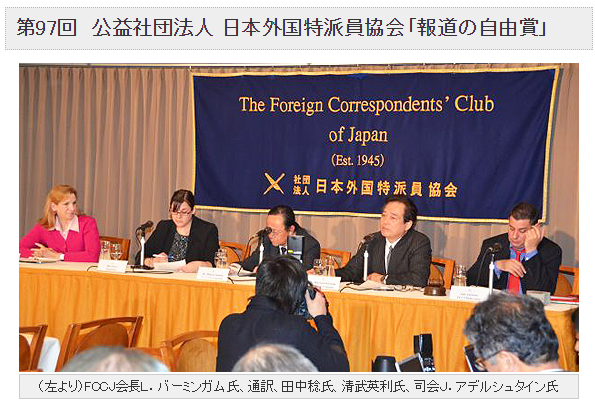
http://www.rosetta.jp/fccj/150422.html
公益社団法人日本外国特派員協会(FCCJ)が 報道の自由推進賞の受賞者を発表
「ジャーナリズムとは報じられたくないことを報じることだ。それ 以外のものは広報に過ぎない」
ジョージ・オーウェル
日本では今、報道の自由が脅かされています。世界報道の自由デー の5月3日、日本外国特派員協会(FCCJ)は報道の自由の推進に貢献 した記者、媒体そして個人を表彰します。 2015 年、国境なき記者団による報道の自由度ランキングで日本の報道 の自由度は世界第 61 位へと後退しました。これは韓国やチリ、セル ビアよりも低い評価です。
2012 年、日本は同ランキングで世界 22 位の評価を受けました。日本 の報道の自由度が下がった理由として、国境なき記者団は特定秘密 保護法が制定されたことで、特に原子力や対米外交に関連した情報 の公開度が後退し、もはやそうした情報は日本ではタブー視される ようになったと酷評しています。
このように、政府にとって都合の悪い情報を出させないようにする ために、公共性の高い情報を伝える調査報道や、記者の取材源の秘 匿などが脅かされています。
そこで日本外国特派員協会(FCCJ)は2015年、報道の自由推進賞を 創設し、世界報道の自由の日となる2015年5月3日に、発表しました。
■調査報道賞(Japan Investigative Journalism Awards)
優れた調査報道を通じて、報道の自由の推進に貢献したジャーナリストもしくはメディアに贈られる。年一度の表彰。
• ファクタ
日大のスキャンダルやその他の金融スキャンダルに代表される、日本でタブーとされるテーマに関する継続的かつ質の高い調査報道に対する功績
• 朝日新聞「プロメテウスの罠」原発の安全面や業界の隠蔽体質や腐敗に関する継続的かつ長期的な調査報道に対する功績
・ ジェイソン・クレンフィールドさん(ブルームバーグニュース)
KDDI の非正規の壁に挑む丸井美穂氏を取り上げた報道に対する功績。
■報道功労賞(Lifetime Achievement Award)
報道の自由および言論の自由の促進に生涯を通じて貢献したジャーナリストまたは個人に贈られる。候補者は日本で活動していることを条件とし、該当者がある場合のみ表彰される。
・ジョン・ミッチェルさん (ジャパン・タイムズほか)
沖縄における枯れ葉剤問題やその他の米軍基地に関連した諸問題に関する一連の報道並びに著作に対して。
■報道の自由の友(Friend of the Free Press)
日本を拠点として報道の自由を促進する運動に取り組む法律家、活動家、内部告発者などが対象。年一度の表彰。
・古賀茂明さん(元経産官僚)
表現の自由を抑圧しようとする政府に対する批判と、東京電力の問題を含む日本の政治や産業界に関する鋭い評論活動に対して。
・中野晃一さん(上智大学教授)
特定の勢力に阿ることなく、また恐れることなくタブーに踏み込み、日本の政治に関する鋭く有益な分析を継続的に行った功績に対して。
・マイケル・ウッドフォードさん(オリンパス前 CEO)
社の会計偽装を内部告発し、日本の企業統治により高度な透明性を促した功績に対して
■年間最優秀出版賞(Publication of the Year)
出版あるいはウェブ上で公開された、優れた調査報道に対して贈られる。年一度の表彰。
・東京新聞
原発問題、政治スキャンダル、汚職、報道の自由に関わる継続的、かつ優れた調査報道に対して。
■殉職した英雄賞(Fallen Hero)
取材中に殉職したジャーナリストに贈られます。活動拠点は日本の 国内外を問いません。該当者がいる場合のみ表彰されます。
• 後 藤健二氏はシリアで取材中に ISIL(イスラム国)に拘束 され、安倍首相が「ISIL と戦う国のために」数億ドルの支 援を約束した数週間後の斬首されたフリーランスジャーナ リストです。彼は戦争そのものを報じるのではなく、戦争の 悲惨な側面を報じる人道ジャーナリストでした。彼は他のジ ャーナリストたちが行きたがらない危険な地域をあえて取 材することで、中東や他の紛争地帯で何が起きているのかを世界に伝えました。
http://www.fccj.or.jp/images/election2015/2015.fop.awards.jp.pdf
(´・ω・`)外国特派員協会って特定思想の工作機関だろ「ジャーナリズムとは報じられたくないことを報じることだ。それ 以外のものは広報に過ぎない」
ジョージ・オーウェル
日本では今、報道の自由が脅かされています。世界報道の自由デー の5月3日、日本外国特派員協会(FCCJ)は報道の自由の推進に貢献 した記者、媒体そして個人を表彰します。 2015 年、国境なき記者団による報道の自由度ランキングで日本の報道 の自由度は世界第 61 位へと後退しました。これは韓国やチリ、セル ビアよりも低い評価です。
2012 年、日本は同ランキングで世界 22 位の評価を受けました。日本 の報道の自由度が下がった理由として、国境なき記者団は特定秘密 保護法が制定されたことで、特に原子力や対米外交に関連した情報 の公開度が後退し、もはやそうした情報は日本ではタブー視される ようになったと酷評しています。
このように、政府にとって都合の悪い情報を出させないようにする ために、公共性の高い情報を伝える調査報道や、記者の取材源の秘 匿などが脅かされています。
そこで日本外国特派員協会(FCCJ)は2015年、報道の自由推進賞を 創設し、世界報道の自由の日となる2015年5月3日に、発表しました。
■調査報道賞(Japan Investigative Journalism Awards)
優れた調査報道を通じて、報道の自由の推進に貢献したジャーナリストもしくはメディアに贈られる。年一度の表彰。
• ファクタ
日大のスキャンダルやその他の金融スキャンダルに代表される、日本でタブーとされるテーマに関する継続的かつ質の高い調査報道に対する功績
• 朝日新聞「プロメテウスの罠」原発の安全面や業界の隠蔽体質や腐敗に関する継続的かつ長期的な調査報道に対する功績
・ ジェイソン・クレンフィールドさん(ブルームバーグニュース)
KDDI の非正規の壁に挑む丸井美穂氏を取り上げた報道に対する功績。
■報道功労賞(Lifetime Achievement Award)
報道の自由および言論の自由の促進に生涯を通じて貢献したジャーナリストまたは個人に贈られる。候補者は日本で活動していることを条件とし、該当者がある場合のみ表彰される。
・ジョン・ミッチェルさん (ジャパン・タイムズほか)
沖縄における枯れ葉剤問題やその他の米軍基地に関連した諸問題に関する一連の報道並びに著作に対して。
■報道の自由の友(Friend of the Free Press)
日本を拠点として報道の自由を促進する運動に取り組む法律家、活動家、内部告発者などが対象。年一度の表彰。
・古賀茂明さん(元経産官僚)
表現の自由を抑圧しようとする政府に対する批判と、東京電力の問題を含む日本の政治や産業界に関する鋭い評論活動に対して。
・中野晃一さん(上智大学教授)
特定の勢力に阿ることなく、また恐れることなくタブーに踏み込み、日本の政治に関する鋭く有益な分析を継続的に行った功績に対して。
・マイケル・ウッドフォードさん(オリンパス前 CEO)
社の会計偽装を内部告発し、日本の企業統治により高度な透明性を促した功績に対して
■年間最優秀出版賞(Publication of the Year)
出版あるいはウェブ上で公開された、優れた調査報道に対して贈られる。年一度の表彰。
・東京新聞
原発問題、政治スキャンダル、汚職、報道の自由に関わる継続的、かつ優れた調査報道に対して。
■殉職した英雄賞(Fallen Hero)
取材中に殉職したジャーナリストに贈られます。活動拠点は日本の 国内外を問いません。該当者がいる場合のみ表彰されます。
• 後 藤健二氏はシリアで取材中に ISIL(イスラム国)に拘束 され、安倍首相が「ISIL と戦う国のために」数億ドルの支 援を約束した数週間後の斬首されたフリーランスジャーナ リストです。彼は戦争そのものを報じるのではなく、戦争の 悲惨な側面を報じる人道ジャーナリストでした。彼は他のジ ャーナリストたちが行きたがらない危険な地域をあえて取 材することで、中東や他の紛争地帯で何が起きているのかを世界に伝えました。
http://www.fccj.or.jp/images/election2015/2015.fop.awards.jp.pdf
特派員の方々はこれに納得してるのかね?
報道の自由度by国境なき記者団
→吉松育美さん騒動16 「国際基準」に踊るのを見て笑う人がいる
結果今度の会長は
ジェイムス・シムズ氏@forbes になったみたいですね
http://www.fccj.or.jp/about/president-and-board-of-directors.html
参考
正体がバレてきた外国特派員協会
https://twitter.com/catbsky/status/600976719353262080
https://twitter.com/catbsky/status/606417796923166720
https://www.facebook.com/SosFccj/posts/816611775102569
https://www.facebook.com/note.php?note_id=828331310597282


コメント
問題は多いですが、安倍首相が「民主党の憲法違反の認識・スタンス」に回答を求めた部分が特に酷いものです。
民主党岡田氏は、認識・スタンスに言及する事なく「説明しないのは”丸投げ”だ」と、何度説明しようと自分の望む答えが出てこないから「あーあー聞こえない」を地で行くものでした。本当に酷い理屈の摩り替えを堂々とやってのけた訳です。
ところが本放送では、集団的自衛権の代案を民主党岡田氏に説明を求めた際の回答を当てて、さも根拠のある発言を速やかに行ったかの様に編集していました。
中国公船・軍艦の領海侵犯と示威行為に対して、領海周辺事態関連法で対処するという、云わば軍艦に対して海上保安庁の艦船で対処するという荒唐無稽な珍回 答をしていたのです。法制の充実=文面の充実で、国防の実態は骨抜きにしたいのでしょう。過去の民主政権時にやり残した事です。
安倍首相の質疑応答を小間切れに、野党連中の放言はより雄弁にという加工を施された偏向ニュースで、何れだけの日本人が「安倍政権は右傾化」等と印象操作されるのか。恐ろしいですね。
民主党岡田氏の奥側に映り込んだ辻本以下の反日政党の顔触れが、岡田氏の発言に一々頷きほくそ笑えんでいたのは、やはりわらえましたが。
因みに維新に配慮するのも民主と動機が取れる存在だという認識でしょうか。
皆さん、騙されないで下さい。
それとスレ主さん、何か掲載コメントの内容が荒れてると思うのは気のせいでしょうか。少し前に「良いブログ記事を書かれている」とのやり取りが有りましたが、何か関係しているのでしょうか。
>NHKが党首討論で私意的編集を
(´・ω・`)やれやれ
党首討論は動画見ましたが、キャッチボールをしているにも関わらずあさっての方向に投げ、自分のところに飛んで来たボールはスルーしてるような討論とは言い難いものでしたね・・
>民主党岡田氏の奥側に映り込んだ辻本以下の反日政党の顔触れ
いつも映ってて嫌なのでモザイクかけて欲しいです
旧維新・現次世代の議員がもっといれば少しは実のある議論が聞けただろうな・・
小野寺さんは素晴らしかったですね
http://www.nicovideo.jp/watch/sm26516496